

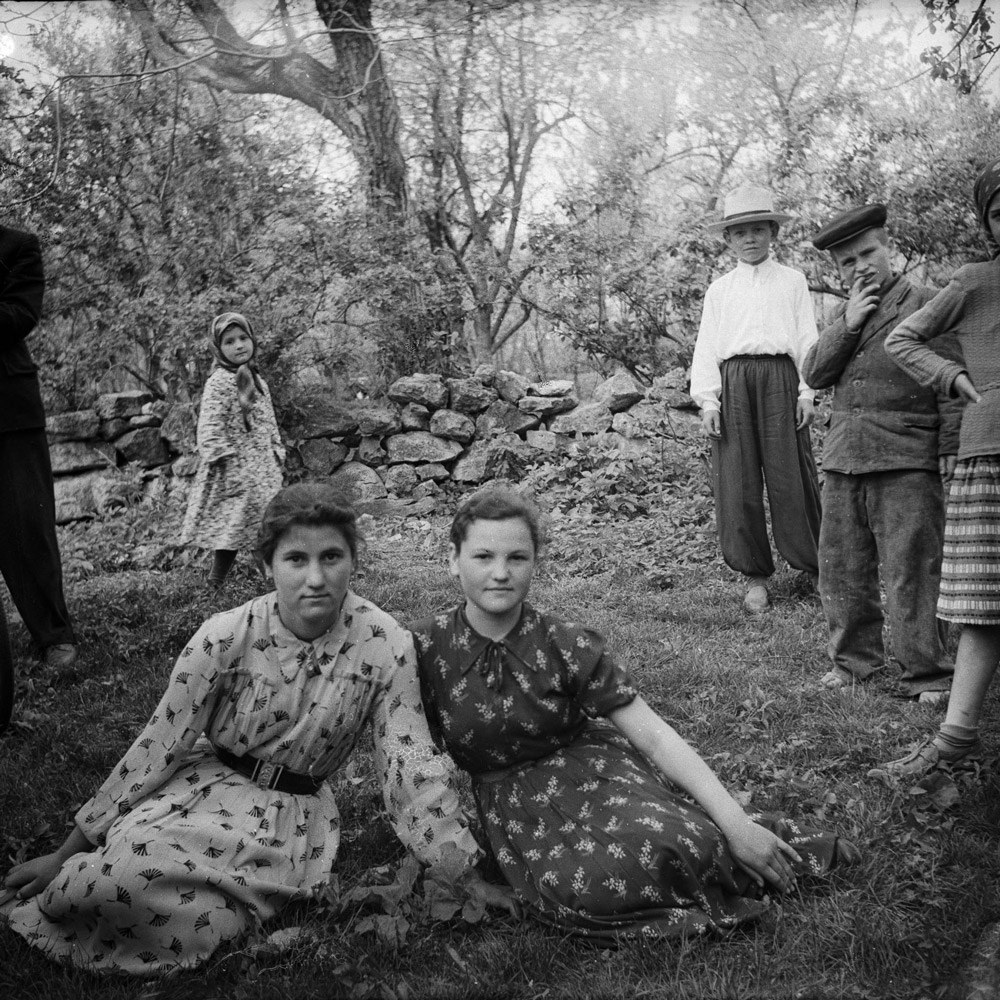
What is left of a village when every family that built it leaves in a single autumn? In southern Moldova, 35 km northeast of Cahul, the answer has a name: Eichendorf. Today the village is called Doina, but the German settlers who founded it in 1908 still have their names on a map, and their bell tower still stands.
A village cut out of an oak forest
Eichendorf was a daughter colony, founded by families from the older German villages of Bessarabia, the region between the Prut and the Dniester that is mostly Moldova today. In 1908 they bought 2,800 desyatinas of land, about 3,050 hectares. Most of it was oak forest, which gave the village its name: Eichendorf, the oak village.
The community was Evangelical Lutheran and belonged to the Albota parish. Until 1911 services were held in farmhouses. That year the villagers built a school and a town hall. The main street ran for about a kilometre, 60 metres wide and lined with acacias. The farmers grew grain and, from the 1930s, soybeans. They kept around 500 horses, more than 500 dairy cows and some 2,000 sheep, and six brickworks made the bricks for the later houses.
Autumn 1940
In June 1940 the Soviet Union took Bessarabia from Romania. That autumn, under an agreement between Germany and the Soviet Union, the Bessarabian Germans were resettled, and the families of Eichendorf left their village after 32 years.
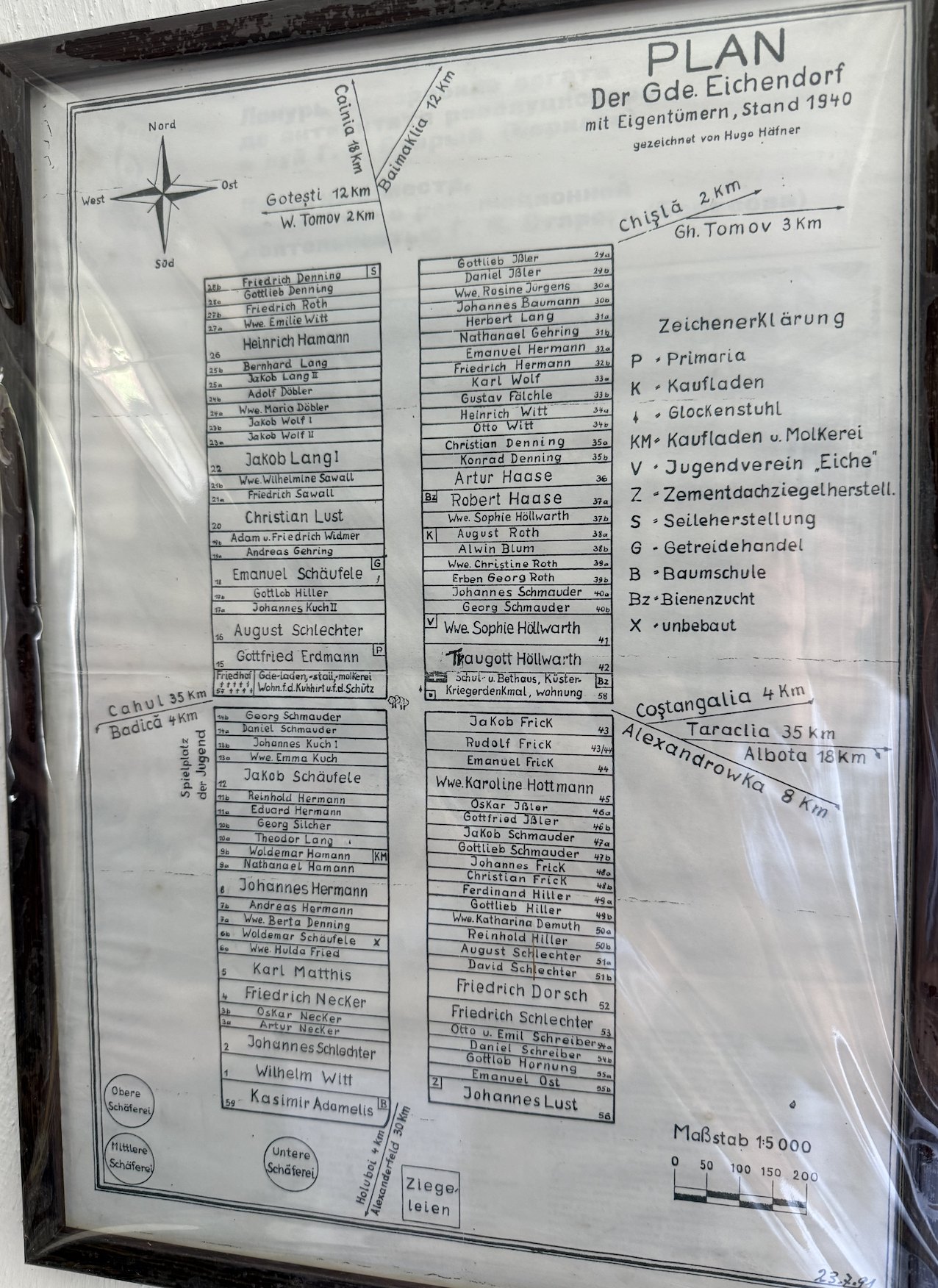
A plan of Eichendorf drawn by Hugo Häfner shows the village as it was in 1940, with the owner of every plot: Frick, Hermann, Schäufele, Schlechter, Denning, Lang, Witt, Hiller, Schmauder and many more. For a descendant, a plot number on this plan can be the first step to standing on the right piece of ground.
What you can still see in Doina
Doina is now a commune of about 1,500 people in Cahul district. Much of Eichendorf is gone, but the bell tower survives. A marble plaque in Romanian, Russian and German names its builder and donor, Robert Hottmann.
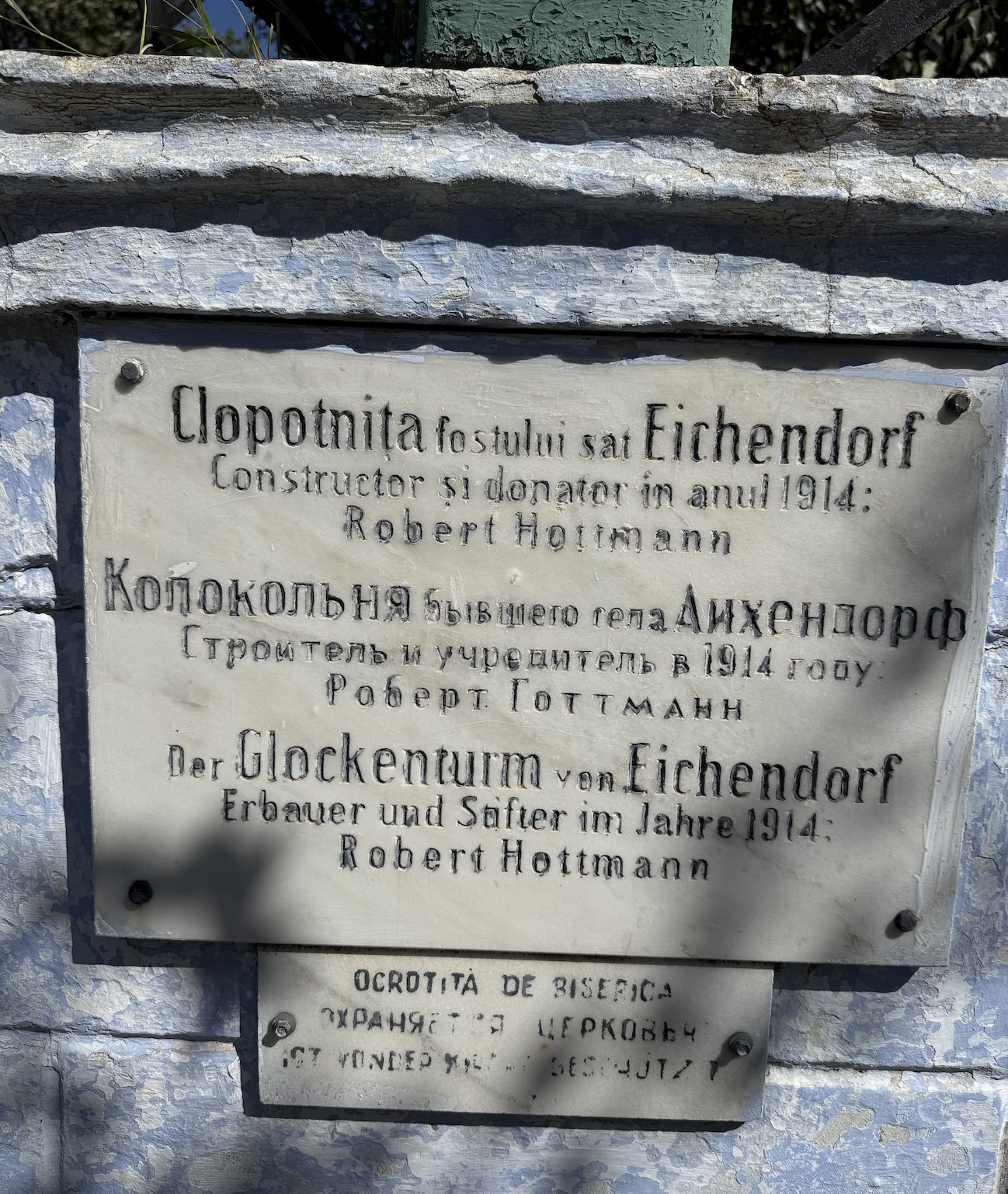
The plaque gives 1914 as the year of the tower. A history of the Eichendorf community says the iron bell tower was put up in 1921, when the village also bought two bells from Germany. Both dates come from serious sources, so we treat the question as open.
Researching an Eichendorf family
Records survive. Black Sea German Research has transcribed the births and deaths of Eichendorf for 1908–1933 from the registers of the Albota parish, and it also publishes a history of the village and its plat map. If you know a surname, a date or a plot number, that is enough to start.
In September 2026 we guided Darin from Canada to Doina, the village where his grandmother was born. If your family came from Eichendorf or another village in Moldova, our Find Your Family’s Moldova ancestral journey is built around the same work.
Why it is worth the trip
In my view, a village like Eichendorf matters most to the people who carry the names on that 1940 plan. Not much is left: a bell tower, a plaque, the land itself. I think that is enough. It lets a grandson stand where his grandmother was born and see it with his own eyes, which no archive can do for him.